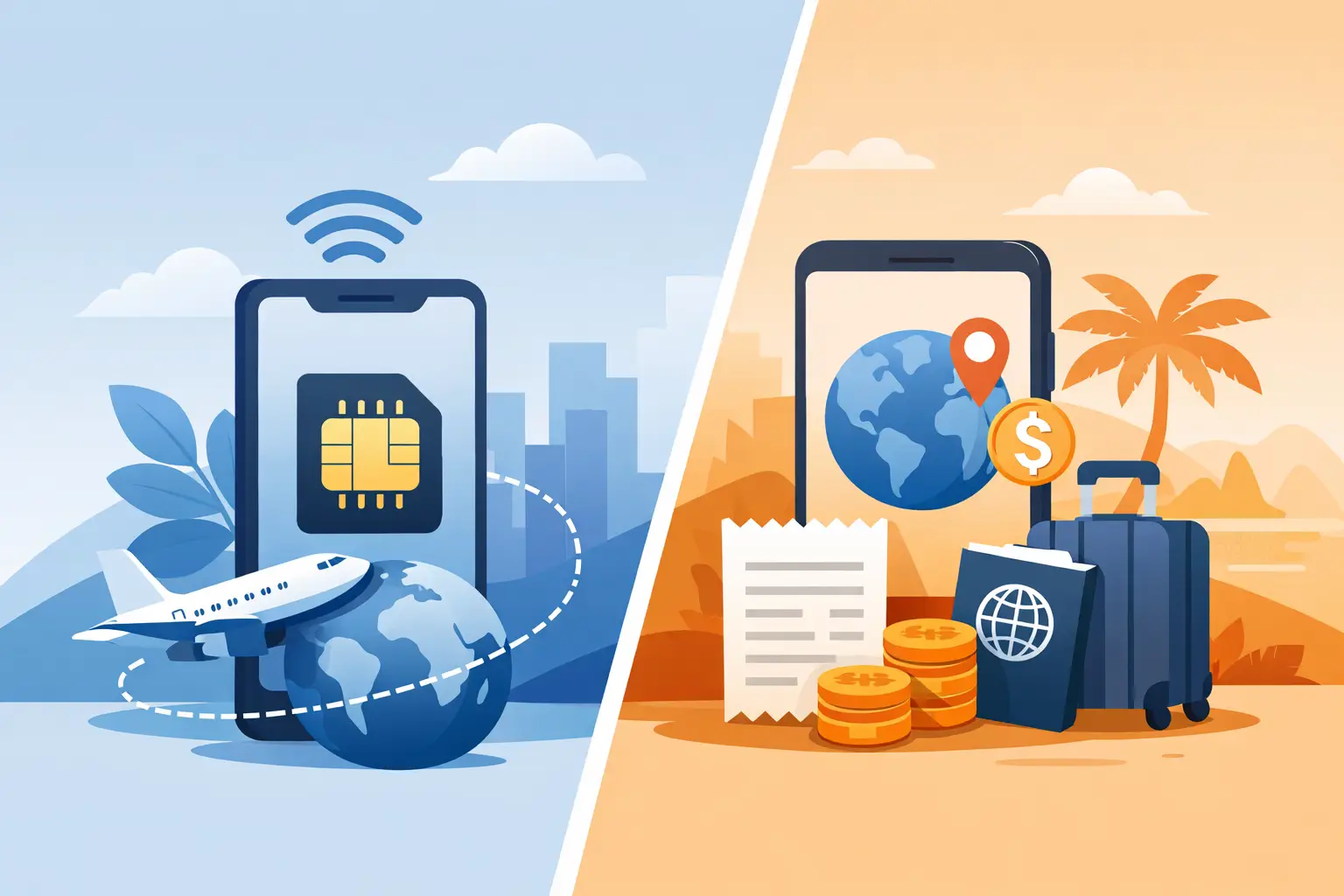
İniyorsunuz, uçak modunu kapatıyor, haritaları açıyorsunuz ve dakikalar içinde operatörünüz, havalimanındaki bir kahvenin ucuz görünmesini sağlayan fiyatlarla uluslararası veriyi faturalamaya başlıyor. Bu yüzden eSIM ile roaming ücretleri arasındaki soru, seyahat etmeden önce önem taşır - günlük paket aktifleştirdiğinizi söyleyen mesajı aldıktan sonra değil.
Çoğu gezgin için eSIM, yurt dışında mobil veri için daha düşük maliyetli seçenektir. Roaming genellikle en kolay seçenektir çünkü kendi operatörünüz üzerinden çalışır; ancak bu kolaylık çoğu zaman daha yüksek günlük ücretler, daha katı veri limitleri veya her ikisi birden ile gelir. Doğru seçim; ne kadar süre seyahat ettiğinize, ne kadar veri kullandığınıza ve aramalar ve mesajlar için asıl numaranızın aktif olması gerekip gerekmediğine bağlıdır.
eSIM ile roaming ücretlerine genel bakış
Roaming ücretleri, telefonunuz başka bir ülkedeki ortak bir ağ kullandığında kendi operatörünüzün faturaladığı tutarlardır. Bu bazen MB başına ücretlendirme anlamına gelir ve maliyetler hızla artabilir. ABD'li gezginler çoğunlukla yurt dışında veri, arama veya mesaj kullandıkları her gün sabit bir miktar tahsil eden uluslararası günlük paketlerle karşılaşır.
eSIM, fiziksel SIM yuvasına dokunmadan telefonunuza yüklediğiniz dijital bir SIM'dir. Kendi operatörünüzün roaming anlaşmasına güvenmek yerine, gideceğiniz yer için bir seyahat veri paketi satın alır ve cihazınıza yüklersiniz. Pratik anlamda, genellikle operatör roaming fiyatları yerine seyahat paketi fiyatlarıyla yerel veya bölgesel mobil veri satın almış olursunuz.
Tasarruflar genellikle bu farktan kaynaklanır.
Roaming ücretleri neden çoğunlukla daha yüksektir
Kendi operatörler öncelikle kolaylık satar. Numaranızı korursunuz, yeni bir şey yüklemenize gerek yoktur ve telefonunuz vardığınızda otomatik olarak bağlanabilir. Kısa seyahatler için bu buna değer gibi hissedebilir.
Ancak fiyatlandırma yapısı nadiren değer odaklı inşa edilir. Yaygın bir durum, ilk günde makul görünen ancak bir veya iki hafta boyunca birikmeye başlayan günlük roaming ücretidir. Seyahatiniz 10 gün sürüyorsa ve operatörünüz günlük uluslararası paket uyguluyorsa, 200 MB da kullansanız 20 GB da kullansanız hizmet kullandığınız her gün ödeme yaparsınız. Bu, iki günlük iş seyahatinde hafif kullanım için kabul edilebilir. Daha uzun bir tatilde ise bunu haklı çıkarmak çok daha güçtür.
Bir ikinci sorun daha var: birçok operatörün roaming planı cömert olarak pazarlanır; ancak küçük yazılar hız sınırlamalarını, kısıtlı yüksek hızlı veriyi veya ülke kısıtlamalarını içerebilir. Dolayısıyla prim fiyat ödeyip yine de prim performans alamayabilirsiniz.
eSIM'in genellikle daha ucuz olduğu durumlar
eSIM, bir veya iki günden fazla veriye ihtiyaç duyduğunuzda maliyet açısından öne çıkar. Bu; çoğu tatil, yurt dışı eğitim seyahati, çok ülkeli seyahat ve yolda uzaktan çalışmayı kapsar.
Operatörünüze sabit bir günlük ücret ödemek yerine, hedefe, süreye ve veri ihtiyacına göre bir plan seçersiniz. Uzun bir hafta sonu için yalnızca 3 GB'a ihtiyacınız varsa 3 GB satın alabilirsiniz. İş seyahati için günlük sınırsız veriye ihtiyacınız varsa bunu seçebilirsiniz. Birkaç ülke ziyaret edecekseniz, bölgesel planlar her varış noktasında her gün ayrı roaming ücreti ödemekten daha uygun maliyetli olabilir.
Bu özellikle indikleri andan itibaren haritalara, araç paylaşım uygulamalarına, çeviri araçlarına, WhatsApp'a, e-postaya ve rezervasyon uygulamalarına güvenen gezginler için yararlıdır. Bu alışkanlıklar, pek çok insanın beklediğinden daha hızlı veri tüketir. Roaming, hafif kullanımı pahalı hale getirebilir. eSIM planları genellikle gerçek seyahat davranışı göz önünde bulundurularak fiyatlandırılır.
Yaygın seyahat senaryolarındaki gerçek maliyet farkı
Avrupa'ya bir haftalık bir seyahat hayal edin. Roaming ile, bir ABD operatörü telefonunuzu kullandığınız her gün günlük uluslararası ücret tahsil edebilir. Haftanın sonunda toplam tutarınız, 5 GB, 10 GB veya hatta sınırsız bir seyahat eSIM'inden önemli ölçüde daha yüksek olabilir.
Şimdi Fransa, İtalya ve İspanya'yı kapsayan iki haftalık bir seyahat hayal edin. Roaming günlük ücretlendirmeye devam eder. Bölgesel bir eSIM planı ise üç ülkeyi tek bir paket altında kapsar; bu da genellikle daha basit ve daha ucuzdur.
Bir günlük sınır geçişi veya gecelik iş durağı için roaming kabul edilebilir olabilir. Hız ve kolaylık için ödeme yaparsınız, değer için değil. Ancak seyahatiniz bunun ötesine uzandığında, matematik çoğunlukla eSIM lehine döner.
Bu yüzden fiyat karşılaştırma platformları önemlidir. eSIM fiyatlandırması sağlayıcılar arasında özdeş değildir ve Japonya için en ucuz plan, Meksika veya İngiltere için en ucuz olmayabilir. Satın almadan önce karşılaştırma yapmak, tasarrufların büyük bölümünün ortaya çıktığı yerdir.
eSIM ile roaming ücretleri: gerçekte ne için ödeme yapıyorsunuz
Fiyat farkı yalnızca veriyle ilgili değildir. Aynı zamanda kontrolle de ilgilidir.
Roaming ile kendi operatörünüz yapıyı belirler. Sundukları planı, belirledikleri fiyatla, dahil ettikleri ülkeler kapsamında alırsınız. eSIM ile seyahatinize uyan paketi siz seçersiniz. Bu daha fazla esneklik anlamına gelir; ancak aynı zamanda doğru planı seçmek için 2 dakika harcamak anlamına da gelir.
Ayrıca farklı şeffaflık seviyeleri için de ödeme yapıyorsunuz. Günlük paketin ne zaman devreye girdiğinden, neyin kullanım sayıldığından veya dahil edilen varış noktaları dışında ne olduğundan tam emin değilseniz roaming faturaları kafa karıştırıcı olabilir. eSIM planları genellikle daha açıktır: belirli bir miktarda veri, belirli sayıda gün geçerli, belirtilen ülkelerde.
Bütçe bilincine sahip gezginler için bu netlik, fiyat kadar önem taşır.
Roaming'in hâlâ mantıklı olduğu durumlar
eSIM her durumda otomatik olarak daha iyi değildir.
İşvereniniz telefon faturanızı karşılıyorsa, roaming ayrı bir seyahat planı kurmaktan daha kolay olabilir. Çok kısa bir seyahatteyseniz ve yalnızca ara sıra veriye ihtiyacınız varsa, kendi operatörünüzü kullanmanın sağladığı zaman tasarrufu ekstra maliyete değebilir. Telefonunuz kilitliyse veya eSIM uyumlu değilse, fiziksel bir yerel SIM satın almadığınız sürece roaming tek pratik seçeneğiniz olabilir.
Sesli aramalar ve SMS tabanlı kimlik doğrulama için asıl numaranızın tam aktif kalması kritik önem taşıyorsa roaming de mantıklı olabilir. Bazı gezginler bunu çift SIM ayarlarını kullanarak çözer - aramalar ve mesajlar için ev hatlarını aktif tutarken veri için eSIM kullanır - ancak herkes bu ayarları yönetmek istemez.
Dolayısıyla evet, daha fazla ödemenin makul olduğu durumlar vardır. Önemli olan bunu bilinçli olarak yapmaktır, varsayılan olarak değil.
eSIM'in takaslarının olabileceği durumlar
eSIM ile ilgili temel takas kurulumudur. Genellikle basittir; ancak yine de kalkıştan önce veya varışta ekstra bir adımdır. Kilitli olmayan, eSIM uyumlu bir telefona ihtiyacınız var ve planı doğru şekilde yüklemeniz gerekiyor. Çoğu gezgin için bu, bir QR kodu tarayıp birkaç yönlendirmeyi takip etmek anlamına gelir; ancak yine de operatör roaming'inden daha az otomatiktir.
Bir diğer takas, birçok seyahat eSIM'inin yalnızca veri sunmasıdır. Ağırlıklı olarak iMessage, WhatsApp, FaceTime, Gmail, Slack ve uygulama tabanlı arama kullanıyorsanız bu sorun değildir. Ancak seyahat planının kendisinde geleneksel sesli arama ve SMS'e ihtiyacınız varsa, önce plan ayrıntılarını kontrol edin.
Ağ önceliği de değişkenlik gösterebilir. Bazı eSIM planları yerel hizmet gibi performans gösterir. Diğerleri, varış noktasına bağlı olarak farklı hız veya kapsama kalitesine sahip ortak ağlara dayanır. Bu nedenle yalnızca fiyata göre satın almak her zaman en akıllıca hareket değildir. En iyi değer, düşük maliyet artı uygun kapsamadır.
Seyahatinizden önce nasıl karar verirsiniz
Üç soruyla başlayın: ne kadar süre seyahat edeceksiniz, ne kadar veri kullanacaksınız ve asıl numaranızın sürekli aktif olması gerekiyor mu?
Seyahatiniz birkaç günden uzunsa ve günlük olarak harita, sosyal uygulama, mesajlaşma ve rezervasyon kullanmayı bekliyorsanız, eSIM genellikle daha iyi bir anlaşmadır. Kısa bir seyahate çıkıyorsanız ve kolaylık maliyetten daha önemliyse, roaming de uygun olabilir. Hem uygun fiyatlı veriye hem de ev numaranıza erişime ihtiyacınız varsa, çift SIM kurulumu çoğunlukla en ideal çözümdür.
İşte CheapereSIM, araştırma derdi olmadan tasarruf etmek isteyen gezginler için tam burada devreye girer. Bir sağlayıcının diğerinden ucuz olup olmadığını tahmin etmek yerine, hedefe özgü seçenekleri karşılaştırabilir ve seyahatinize en uygun en düşük maliyetli planı satın alabilirsiniz.
Çoğu gezgin için basit bir kural
Sürpriz faturalardan kaçınmaya çalışıyorsanız, eSIM genellikle daha güvenli bir seçimdir. Peşin ödeme yaparsınız, ne aldığınızı bilirsiniz ve kendi operatörünüzün ücretlendirdiği her şeyi kabul etmek yerine planı seyahatinize göre seçersiniz.
Roaming kolaylık için tasarlanmıştır. eSIM ise kontrol ve daha düşük maliyet için. Çoğu tatil gezgini, öğrenci, sırt çantalı gezgin, dijital göçebe ve sık seyahat eden için bu kontrol, seyahat verisini uygun fiyatlı tutan şeydir.
Bir sonraki seyahatinizden önce telefon uyumluluğunuzu kontrol edin, veri kullanımınızı dürüstçe tahmin edin ve yalnızca ilk gün fiyatına değil, tüm seyahat maliyetini karşılaştırın. Birkaç dakikalık hazırlık, çoğu gezginin beklediğinden çok daha fazlasını kurtarabilir.