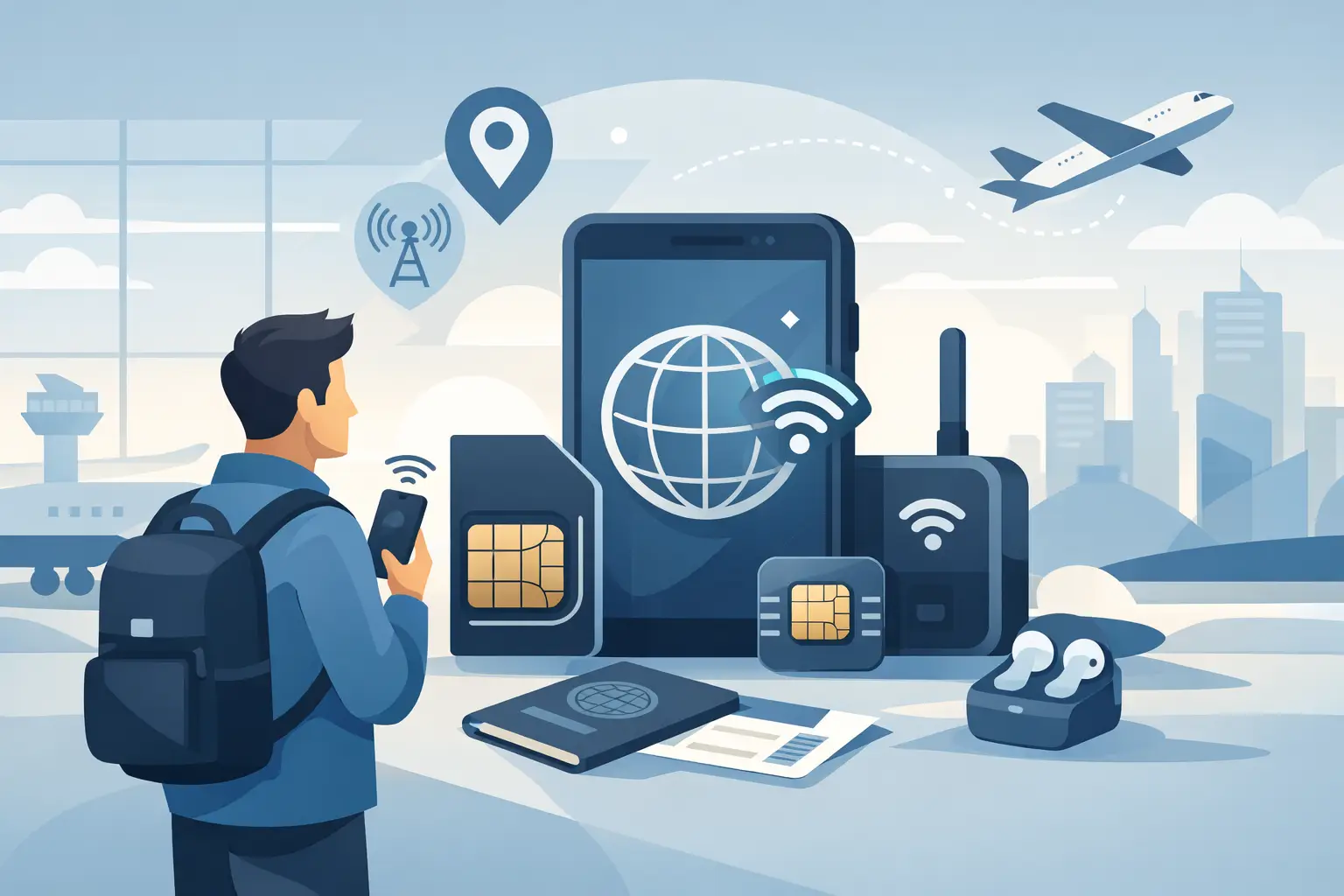
Kısa cevap: havalimanındaki SIM kart standına en ucuz alternatif, uçmadan önce aldığınız bir seyahat eSIM'idir. Wi-Fi üzerinden birkaç dakikada kurarsınız, indiğiniz anda devreye girer, her zamanki numaranız da asıl SIM kartınızda açık kalır. Operatör kilidi olmayan, eSIM destekleyen her telefonda çalışır: iPhone XS ve sonrası, Google Pixel 3 ve sonrası, bir de Samsung Galaxy S20 ve sonrasındaki modellerin çoğu.
Uzun bir uçuşun ardından inersiniz, uçak modunu kapatırsınız ve telefonunuz aniden bir seyahat acil durum aracına dönüşür. Yol tarifi, bir araç, otel rezervasyonunuz, belki eve bir mesaj. Tam da bu yüzden pek çok gezgin uçmadan önce havalimanı SIM kart alternatifi aramaya başlıyor - çünkü kiosk kuyruğu, yüksek fiyatlar ve geliş terminalindeki kurulum derdi, yorgun olduğunuzda en az isteyeceğiniz şeydir.
Çoğu gezgin için en iyi alternatif bir eSIM'dir. Fiziksel bir SIM kart olmadan, ev operatörünüzün dolaşım ücretleri olmadan ve indikten sonra mağaza aramak için zaman harcamadan mobil veri almanızı sağlar. Ancak tek seçenek bu değildir; doğru tercih telefonunuza, varış noktanıza ve gerçekte ne kadar veriye ihtiyaç duyduğunuza bağlıdır.
Gezginlerin neden havalimanı SIM kart alternatifi aradığı
Havalimanı SIM gişeleri gerçek bir sorunu çözer, ancak bunu genellikle yüksek bir fiyatla yapar. Kolaylık için, sınırlı rekabet için ve bağlantıya hemen ihtiyaç duymanız gerçeği için ödeme yaparsınız. Bu da çoğunlukla daha az plan seçeneği, şişirilmiş fiyatlandırma ve seçenekleri dikkatle karşılaştırmanın en az muhtemel olduğu zamanlarda satış baskısı anlamına gelir.
Bir de kurulum sorunu var. Bazı havalimanı kioskları hâlâ fiziksel SIM kart satıyor; bu da mevcut SIM'inizi değiştirmenizi, küçük bir çipi takip etmenizi ve bazen dil engellerini ya da kayıt kurallarını aşmanızı gerektiriyor. Telefonunuz ana numaranıza bağlı iki faktörlü kimlik doğrulama kullanıyorsa, ev SIM'inizi çıkarmak zahmetli olabilir.
İşte bu yüzden gezginler giderek daha fazla, kalkıştan önce kurabilecekleri dijital seçenekleri tercih ediyor. Veriler hazır olarak inebilirseniz, havalimanı kiosku artık varsayılan seçenek olmaktan çıkıyor.
Çoğu gezgin için en iyi havalimanı SIM kart alternatifi
Bir eSIM, genellikle en güçlü havalimanı SIM kart alternatifidir; çünkü daha hızlıdır, daha ucuzdur ve önceden karşılaştırılması daha kolaydır. Çevrimiçi bir plan satın alırsınız, saniyeler içinde bir QR kodu alırsınız, seyahatinizden önce kurarsınız ve varışınızda bağlanırsınız. Fiziksel SIM kart yok. Sıra bekleme yok. Dolaşım faturası şoku yok.
Bu, özellikle haritalar, araç paylaşımı, mesajlaşma uygulamaları ve check-in e-postaları için hemen veriye ihtiyaç duyan gezginler için harika çalışıyor. Kısa geziler, çok ülkeli seyahatler ve eSIM üzerinden seyahat verisi kullanırken aramalar veya mesajlar için birincil SIM'lerini etkin tutmak isteyenler için de daha iyi bir seçenek.
Asıl sorun uyumluluktur. Telefonunuzun eSIM'i desteklemesi gerekir ve genellikle operatör kilidinin açık olması gerekir. Yeni iPhone modellerinin çoğu, Google Pixel cihazları ve pek çok Samsung Galaxy modeli bunu destekler, ancak her cihaz desteklemez. Satın almadan önce kontrol edilecek ilk şey budur.
eSIM ve havalimanı SIM kiosku
Amacınız yalnızca kolaylıksa, her iki seçenek de işe yarayabilir. Fark, maliyet ve kontroldedir.
Havalimanı kiosku anlıktır, ancak o gişede ne satıldığından seçim yaparsınız. Bir eSIM, evden çıkmadan önce plan boyutlarını, kapsama alanlarını ve fiyatlandırmayı karşılaştırmanıza olanak tanır. Bu önemlidir çünkü her gezginin ihtiyacı aynı değildir. Hafta sonu şehir molası yalnızca 3 GB ile 5 GB arasında gerektirebilir. Hotspot kullanımlı iki haftalık bir iş gezisi çok daha büyük bir plan veya sınırsız günlük veri gerektirebilir.
Fiyat, boşluğun sıkça genişlediği yerdir. Havalimanı planları genellikle basit görünen ancak gigabyte başına daha pahalıya mal olan paketler hâlinde sunulur. eSIM pazar yerleriyle, herkese uyan tek boy bir turist SIM'ini kabul etmek yerine birden fazla sağlayıcıyı karşılaştırabilir ve en ucuz uygun seçeneği seçebilirsiniz.
Ayrıca daha az sürtüşme vardır. Bir eSIM ile kurulum telefonunuzda birkaç dakika içinde tamamlanır. Kiosk SIM'i ile bir kart takmanız, telefonunuzu yeniden başlatmanız, ayarları değiştirmeniz ve orijinal SIM'inizi güvenli bir yerde saklamanız gerekebilir.
| Destinasyon | Paket | CheapereSIM | Airalo | Tasarrufunuz |
|---|---|---|---|---|
| United States | 20GB · 30 days | $18.67 | $42.00 | 78% |
| Japan | 20GB · 30 days | $13.21 | $42.00 | 84% |
| United Kingdom | 10GB · 30 days | $7.34 | $22.00 | 67% |
| Turkey | 20GB · 30 days | $10.62 | $33.00 | 87% |
| Thailand | 10GB · 30 days | $8.24 | $18.00 | 54% |
| Spain | 10GB · 30 days | $7.34 | $22.00 | 67% |
Rakip fiyatları sık sık değişir; bu nedenle eski rakamları gösterge olarak değerlendirin ve satın almadan önce güncel fiyatı kontrol edin.
Havalimanı SIM kartlarının diğer alternatifleri
Bir eSIM her gezgin için her zaman doğru yanıt değildir. Üç farklı gerçekçi alternatif daha vardır ve her birinin artıları ve eksileri bulunur.
Ev operatörünüzden uluslararası dolaşım
Bu, seyahatinizden önce hiçbir şey yapmanız gerekmediği için en kolay seçenektir. Operatörünüzün o ülkede dolaşım sunduğunu varsayarak telefonunuz yurt dışında da çalışır. Sorun fiyattır. Dolaşım paketleri, özellikle daha uzun seyahatler için yerel veri veya eSIM planlarından çok daha pahalı olabilir.
Dolaşım, tek günlük iş gezisi veya hızlı bir aktarma gibi tasarruftan çok kolaylığın önemli olduğu çok kısa seyahatler için hâlâ mantıklı olabilir. Ancak tatiller, uzun konaklamalar ve sık seyahatler için genellikle en ucuz seçenek değildir.
Şehirde yerel SIM kart
Havalimanı dışında yerel SIM satın almak, geliş terminalinde satın almaktan daha ucuz olabilir. Bazı ülkelerde bakkallar, operatör mağazaları ve elektronik mağazaları, havalimanı kioskalarından daha iyi fiyatlar sunar.
Dezavantaj zamanlamadır. Havalimanından o mağazaya gitmek için hâlâ internet erişimine ihtiyacınız var ve kayıt için pasaportunuza ihtiyaç duyabilirsiniz. Geç gece veya tatil günü gelirseniz, açık bir dükkan bulmak başlı başına bir dert haline gelebilir.
Pocket Wi-Fi
Pocket Wi-Fi, birden fazla cihaz taşıyan gruplar veya gezginler için kullanışlı olabilir. Ayrı planlar satın almak yerine, tek bir hotspot birkaç telefonu, tableti veya dizüstü bilgisayarı bağlayabilir.
Ancak ödünleşimler vardır. Şarj edilmesi, taşınması ve iade edilmesi gereken başka bir cihazdır. Pil ömrü önemlidir. Gruptaki bir kişi hotspot'u alıp uzaklaşırsa, diğerleri bağlantıyı kaybeder. Yalnız gezginler için genellikle kendi telefonunda eSIM kullanmaktan daha az pratiktir.
eSIM'in en iyi havalimanı SIM kart alternatifi olmadığı durumlar
Başka bir seçeneğin daha iyi olabileceği durumlar vardır.
Telefonunuz eSIM uyumlu değilse karar basittir - dolaşım, fiziksel SIM veya pocket Wi-Fi gereklidir. Cihazınız operatör kilitliyse, eSIM seçenekleriniz de sınırlı olabilir.
Yalnızca veri değil, aramalar için yerel bir telefon numarasına ihtiyaç duyuyorsanız, bazı havalimanı veya yerel SIM planları daha uygun olabilir. Pek çok seyahat eSIM planı yalnızca veri içerir. Bu, WhatsApp, FaceTime ve diğer internet tabanlı uygulamalar için uygundur, ancak özellikle geleneksel sesli hizmet gerekiyorsa ideal değildir.
Birkaç ay boyunca bir ülkeyi ziyaret ediyorsanız, yerel bir operatör planı sonunda kısa süreli bir seyahat eSIM'inden daha ekonomik olabilir. Uzun süreli gezginler, öğrenciler ve geçici sakinler her ikisini de karşılaştırmalıdır.
Uçmadan önce doğru seçeneği nasıl belirlersiniz
Telefonunuzdan başlayın. eSIM destekleyip desteklemediğini ve kilidinin açık olup olmadığını kontrol edin. Bu olmadan karşılaştırma hızla sona erer.
Ardından gezi sürenizi ve kullanımınızı düşünün. Ağırlıklı olarak haritalara, mesajlaşmaya, e-postaya ve hafif internet gezintisine ihtiyaç duyuyorsanız, daha küçük bir hazır ödemeli eSIM genellikle yeterlidir. Yayın yapmayı, bir dizüstü bilgisayara hotspot bağlamayı veya uzaktan çalışmayı planlıyorsanız, daha büyük bir şey seçin ya da makul kullanım koşullarına sahip sınırsız bir plan arayın.
Sonra coğrafyayı düşünün. Birden fazla ülkeyi ziyaret ediyorsanız, bölgesel bir eSIM genellikle ayrı yerel planlar satın almaktan daha pratiktir. Tek bir yerde kalıyorsanız, yalnızca yerel planları da karşılaştırın.
Son olarak, etkinleştirme zamanlamasına bakın. Bazı planlar kurulduğunda başlarken, diğerleri varış noktanızdaki bir ağa ilk bağlandıklarında başlar. Günleri boşa harcamadan her şeyi kalkıştan önce kurmak istiyorsanız bu ayrıntı önemlidir.
İyi bir eSIM satın alma deneyimi nasıl görünmeli
En iyi havalimanı SIM kart alternatifi yalnızca verinin kendisiyle ilgili değildir. Ayrıca ne kadar hızlı satın alabileceğiniz, kurabileceğiniz ve kullanabileceğinizle de ilgilidir.
İyi bir eSIM deneyimi, sağlayıcıları açıkça karşılaştırmanıza, fiyatlandırmayı önceden görmenize, tam olarak ne kadar veri aldığınızı anlamanıza ve QR kodunu saniyeler içinde almanıza izin vermelidir. Kurulum, teknik destek olmadan birkaç dakika içinde tamamlayabileceğiniz kadar basit olmalıdır.
Karşılaştırma tabanlı platformların yardımcı olabileceği yer burasıdır. Tek bir sağlayıcının envanterine yönlendirilmek yerine, birden fazla seçeneği kontrol edebilir ve gezinize uyan en ucuz planı seçebilirsiniz. Bu, değere önem veren gezginler için marka bağlılığından çok daha uygundur. CheapereSIM tam olarak bu tür karşılaştırma öncelikli yaklaşım üzerine inşa edilmiştir.
Çoğu gezgin için basit bir kural
İnişten bağlantıya en kısa yolu istiyorsanız, telefonunuz desteklediğinde eSIM kullanın. Havalimanı kiosku fiyat artışını ortadan kaldırır, fiziksel SIM değişimini atlar ve iner inmez size veri sağlar.
Telefonunuz eSIM'i desteklemiyorsa, bir sonraki en iyi seçenek geziye bağlıdır. Hızlı bir ziyaret için dolaşım, ekstra maliyete değer olabilir. Daha uzun bir konaklama için şehirden alınan yerel bir SIM daha mantıklı olabilir. Cihaz paylaşan aileler veya ekipler için pocket Wi-Fi hâlâ yerini bulabilir.
Asıl amaç yalnızca internete bağlanmak değildir. Bütçenize, telefonunuza ve gerçekten seyahat ettiğiniz şekle uyan bir planla varmaktır. Bunu kalkıştan önce çözdüğünüzde, havalimanı çözmeniz gereken bir sorun olmaktan çıkar.
Sıkça sorulan sorular
Havalimanındaki SIM kart standına en ucuz alternatif nedir?
Uçmadan önce internetten aldığınız bir seyahat eSIM'i genelde en ucuz seçenektir. Wi-Fi üzerinden birkaç dakikada kurarsınız, indiğinizde devreye girer, mevcut numaranız asıl SIM kartınızda kalır. Havalimanı gişeleri ise gidip anında hat almanın kolaylığı için fazladan para alır ve sınırlı sayıda paket sunar.
Varmadan önce eSIM satın alabilir miyim?
Evet, zaten eSIM kullanmanın asıl sebebi bu. Paketi alırsınız, QR kodu e-postayla gelir, kurulumu daha evdeyken, Wi-Fi'niz varken yaparsınız. Paket, gideceğiniz yere varıp bir şebekeye bağlandığınızda başlar; yani yolculuk başlamadan hiçbir şey boşa gitmez.
Seyahat eSIM'i kullanmak için telefonumun operatör kilidi açık mı olmalı?
Evet. Operatör kilitli bir telefon, donanımı eSIM destekliyor olsa bile üçüncü taraf bir eSIM profilini kabul etmez. Peşin alınan ya da borcu tamamen bitmiş telefonların çoğu kilitsizdir; hâlâ operatörün taksitli kampanyasında olan bir cihaz ise çoğu zaman kilitlidir. Paket almadan önce kontrol edin.
Hangi telefonlar eSIM destekler?
eSIM desteği iPhone XS ve sonrasında, Google Pixel 3 ve sonrasında, bir de Samsung Galaxy S20 ve sonrasındaki cihazların çoğunda var. Birkaç bölgesel sürüm bunun dışında kalır; en bilinenleri Çin pazarına özel iPhone modelleri ile Hong Kong'da satılan bazı Samsung modelleridir.
Telefonum eSIM desteklemiyorsa ne yapmalıyım?
Havalimanı yerine şehirden fiziksel bir yerel SIM kart alın. Şehirdeki mağazalar ve marketler, geliş salonundaki gişelerden sürekli olarak daha ucuzdur; çalışanlar da genelde kaydınızı yapıp kartı sizin için takabilir. Tek bir bağlantıyı birkaç kişi paylaşacaksa taşınabilir Wi-Fi cihazı da değerlendirmeye değer.